The Paris Protest of 1889
By The Lead Archivist | Case File 01
It is difficult to imagine the skyline of Paris without its most recognizable iron spire. Yet, when Gustave Eiffel's company won the bid to construct a centerpiece for the 1889 Exposition Universelle, the reaction from the city's cultural vanguard was not one of awe, but of absolute revulsion.
The conflict began almost as soon as the foundations were dug. To the traditionalists, Paris was a city of low-slung stone, of Haussmann's elegant boulevards, and of classical restraint. Eiffel’s proposal was seen as an industrial abomination—a skeletal factory chimney thrust into the heart of the capital.
This quote formed the opening volley of the infamous "Protest of the Artists," published in Le Temps in February 1887. The petition was signed by heavyweights of French culture, including Guy de Maupassant, Charles Gounod, and Charles Garnier (architect of the Opéra Garnier). They argued the tower would humiliate the monuments of Paris, casting a "hateful shadow" over Notre Dame and the Louvre.
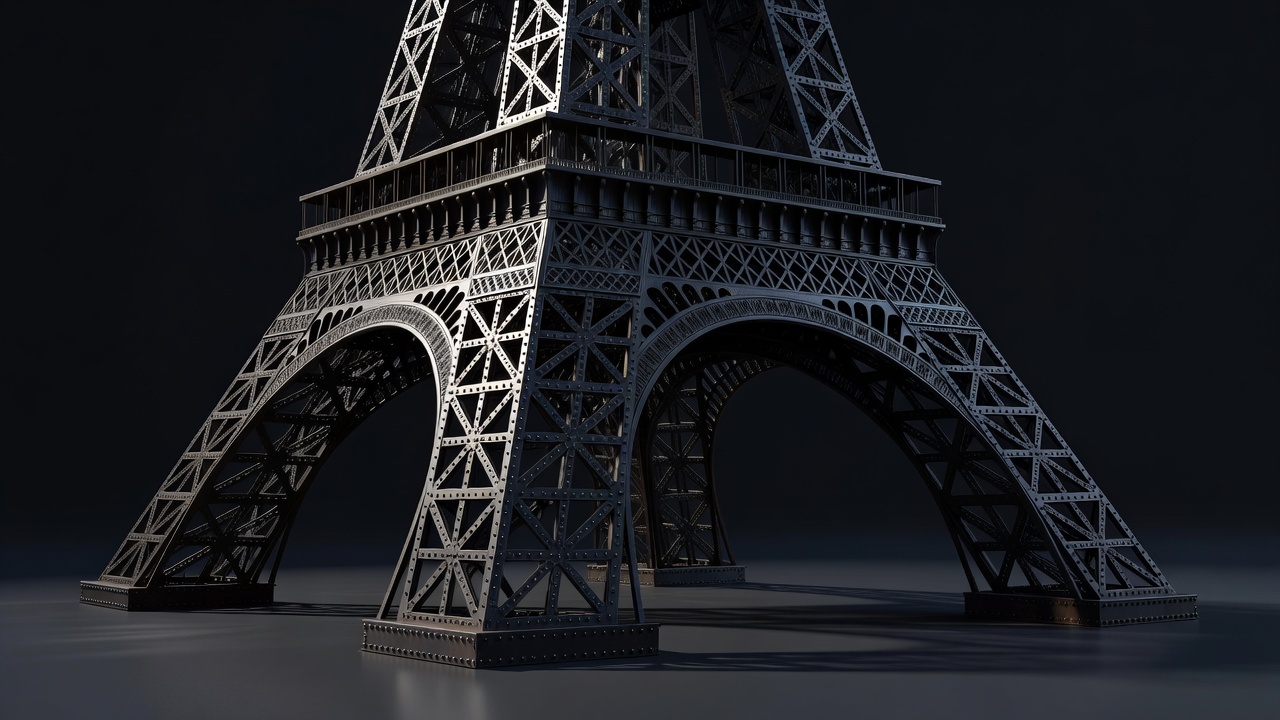
Gustave Eiffel was not intimidated. A master engineer, he responded with cold, calculated logic. He compared his tower to the Pyramids of Egypt, arguing that scale and engineering possessed their own inherent aesthetic value. Behind the scenes, Eiffel manipulated the press, funded his own counter-campaigns, and ruthlessly pushed his labor force to meet the brutal deadline.
The construction itself was a logistical nightmare. Over 18,000 individual iron pieces were prepared at Eiffel’s factory in Levallois-Perret, held together by 2.5 million rivets. The precision required was unprecedented; a miscalculation of a fraction of an inch could compromise the entire structure.
| Element | Specification | Historical Note |
|---|---|---|
| Height (Original) | 312 meters | Held title of tallest structure until 1930. |
| Material | Puddle Iron | Chosen for flexibility and immense strength. |
| Concession | 20 Years | Originally slated to be dismantled in 1909. |
The ultimate irony of the scandal is how quickly the narrative shifted. Upon completion, the tower became an immediate sensation. It paid for its own construction costs within months through ticket sales alone. Even Guy de Maupassant, one of its fiercest critics, purportedly ate lunch at the tower's restaurant every day—claiming it was the only place in Paris where he didn't have to look at it.
Today, the Tower stands not just as a marvel of engineering, but as a monument to the triumph of ambition over orthodox taste. The artistic establishment of 1889 lost their war, and the "monstrous" iron spire became the very soul of the city.